


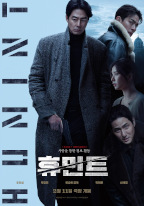
South Korea 2025
Genre:
Thriller, Drama
Director:
Ryoo Seung-wan
Cast:
Zo In-sung
Park Jeong-min
Park Hae-joon
Shin Se-kyung
Lee Shin-ki
Woo Jung-won
Kim Jae-rok
Jung Eugene
Joo Bo-bi

Humint
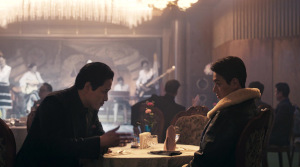
Story: Jo (Zo In-sung) works for the South Korean secret service. After failing to extract one of his informants alive in time, he is plagued by self-recrimination and guilt. His latest mission is to dismantle a drug ring operating around Vladivostok. The Russian mafia, with the help of North Korean agent Hwang (Park Hae-joon), intercepts young women who believe they are being smuggled into South Korea via Russia and then China. In reality, they are drugged and sold. Hwang's dealings are not authorized by the North Korean leadership. When North Korean agent Park Geon (Park Jeong-min) visits Hwang to investigate him, he also unexpectedly encounters Chae Seon-hwa (Shin Se-kyung), his former fiancée, who one day simply vanished. Chae is an informant for the South Korean intelligence service, receiving medication for her sick mother in North Korea as payment. Jo is leading the mission, hoping to gain more information about the drug and human trafficking ring through Chae. Very soon, however, the espionage game becomes extremely dangerous for everyone involved...

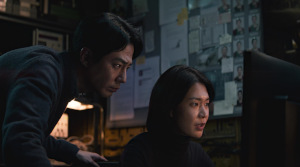
Review: "Humint" is a pretty safe bet for Netflix, because who doesn't enjoy a spy thriller? And the director is none other than Ryoo Seung-wan, who recently delivered a solid action thriller with "I, the Executioner" and is, of course, a veteran of the genre. The film's opening does indeed promise some great action. But unfortunately, a long dry spell sets in afterward. The story is told from two perspectives, which is a good idea in principle, but the plot remains surprisingly flat. Add to that a pace that, to put it bluntly, has almost a soporific effect. While it's nice to have an antagonist who ultimately pursues the same goal as our hero, the characters themselves remain rather bland. It takes the (thankfully long) finale for the film to become interesting at all. That's considerably less than I had hoped for.
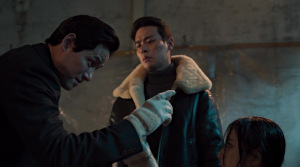
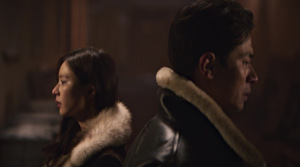
Another jarring negative factor is the film's two-part structure. The spy story takes its time to get going - with the minor problem that it never really does. There are scenes in a restaurant where meaningful glances are exchanged and characters stare thoughtfully into space, countless images from security cameras are examined, and backstories, such as Seon-hwa's mother having cancer, are repeatedly explored. Unfortunately, this doesn't add any depth to the characters. After it's revealed that Seon-hwa and Geon were once engaged, not much more happens on that level. We're simply meant to believe that the feelings from back then still exist, albeit dormant. Exactly in what shape remains unclear. We also never experience any real chemistry between the supposed lovers. Because the romance is also a driving force of the story, at least for the antagonist, this reveals a significant and avoidable flaw in the plot. Jo's simple motivator, not to lose yet another informant, is almost superior.
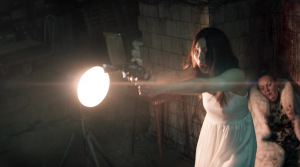
The major problem, however, is the leisurely pace at which everything is put into place. The story isn't nearly as smart as it tries to appear, even if it weren't a spy thriller. But Ryoo operates within this genre, and one expects a few more twists, breathtaking situations where everything is at stake, and characters whose loyalties remain unclear. None of that is present. And then comes the grand finale, which brings us to the aforementioned duality of the film. When it comes to action, the director is second to none. He's simply a master of it, and there's nothing to criticize there. Still, the finale makes the rest of the film, which constitutes the main runtime, feel like a single, continuous introduction. The breakneck pace towards the end makes it feel even more tedious in retrospect, like an anomaly or simply a different story focusing on the same characters.
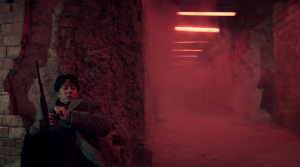
I do want to say a few words about the action, though, since it's the film's only real strength. It begins with an unarmed confrontation, the quality of which isn't matched in the finale. Nonetheless, there are several shootouts at the end, and these are captured with the necessary intensity and a certain tactical approach, so it doesn't feel like mindless shooting. Suddenly, there's something at stake, too. Taking a bullet here could actually be fatal or at least have an impact on the further course of events – unlike in the action films that still imitate 80s cinema these days (although there's nothing inherently wrong with that, as long as the action is good). A few directorial touches that demonstrate some innovation, such as the depiction of a flashbang grenade's effect, as well as some good tactical ideas, like when Jo quickly shoots out the lights behind him to ambush advancing enemies, are genuinely enjoyable.
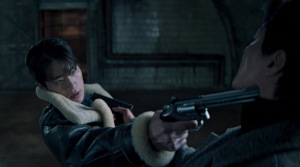
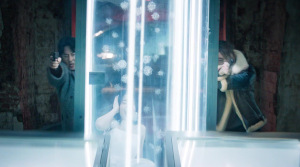
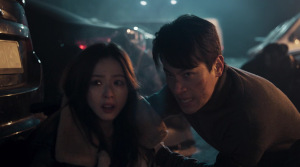
Besides the aforementioned weaknesses, the story unfortunately also contains several logical inconsistencies. Surveillance cameras seem to be everywhere, and both sides appear to be aware of this, since they are essentially spying on each other through them. Despite this, there are countless scenes in which the characters are shockingly careless. Right from the start, when the informant bursts into panicked crying and screaming for no apparent reason, thus bringing about her own downfall, it becomes clear that the story is merely trying to fit certain pieces of the puzzle into place. Zo In-sung ("Escape from Mogadishu") sadly fails to deliver a memorable performance with the script he's given, but Park Jeong-min ("The Ugly") at least possesses the flair of an anti-hero whose love compels him to act against his ideology. That's something, at least. All in all, "Humint" is an espionage thriller that should have been only 90 minutes long. It seems Ryoo Seung-wan artificially inflated his film to two hours because, in his opinion, a good film simply has to be that long. As a genre piece, however, the film is a disappointment. Action fans will have to stick it out until the finale, but at least they'll be rewarded for their patience. It's not a well-rounded experience, though.





Disclaimer
