


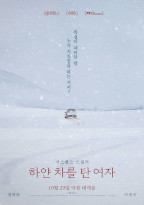
Ha-yan cha-reul tan yeo-ja
South Korea 2025
Genre:
Mystery, Thriller
Director:
Christine Ko Hye-jin
Cast:
Jung Ryeo-won
Lee Jung-eun
Kim Jung-min
Jang Jin-hee
Kang Jung-woo

The Woman in the White Car
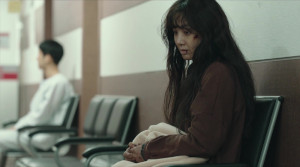
Story: Do-kyeong (Jung Ryeo-won) arrives at a small-town hospital with an injured woman. She had managed to drive the woman to the hospital herself, albeit with great difficulty, and is completely disoriented. The police are called, and Hyeon-joo (Lee Jung-eun) begins an investigation with her partner. The injured woman is currently undergoing surgery; Do-kyeong also appears to have minor injuries but refuses treatment, primarily because she is still in shock. She wants to see her sister, Mi-kyeong, who is evidently the woman who was seriously injured. After calming the bewildered woman down, the police officer learns that her sister and her new boyfriend, Jeong-man (Kang Jung-woo), had come to visit her. During the visit, Do-kyeong witnessed Jeong-man abusing her sister. When Mi-kyeong tried to flee, the boyfriend stabbed her. Mi-kyeong managed to incapacitate her boyfriend with a stone just before losing consciousness. However, some aspects of the story do not quite add up, likely because Do-kyeong is on medication and suffers from mental health issues. The policewoman is now searching for Jeong-man but cannot locate him. It turns out, moreover, that the critically injured woman is not the sister, but rather Eun-soo (Kim Jung-min); the actual sister, Mi-kyeong (Jang Jin-hee), is nowhere to be found. It appears Hyeon-joo will have to wade through a web of lies before she can uncover the truth.

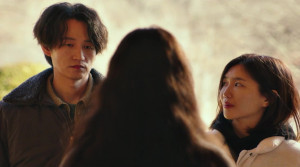
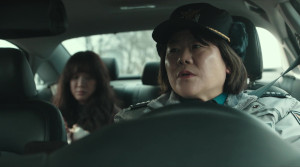
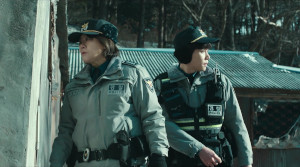
Review: The opening of the unusually titled "The Woman in the White Car" is quite promising. Not only are we immediately plunged into a major mystery, but the setting — a snowy small town populated by a tight-knit cast — creates an atmosphere that feels both claustrophobic and strangely cozy. At least, that is, until the first act of violence occurs. Do-kyeong’s schizophrenia also injects a sense of unease into the film; we can never be certain whether she is on the verge of a hysterical episode or if we have caught her in a calmer moment where she might reveal more about the events at hand. Indeed, the thriller is packed with surprises and riddled with contradictions in the characters' accounts, ensuring that even after hearing the umpteenth version of events, one remains convinced there is more to the story. As the narrative unfolds and weaves in various subplots, the film manages to keep the viewer oriented while simultaneously fueling a feverish desire to piece together the actual truth.
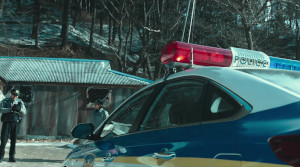
I have to admit I was a bit skeptical when I saw the first iteration of the story. The man beats his girlfriend so viciously that it causes physical discomfort for the viewer, while the only other more or less important male character is a young police officer who is still wet behind the ears. Since the film was directed by a woman, I feared that the men — there is also an abusive father — would be portrayed as either cruel or dim-witted, while the women were cast as superheroes. However, this Korean thriller avoids the very trope Hollywood seems unable to resist these day - that of a female protagonist who is simply amazing just because she is a woman. First and foremost, the women here are human beings who grow through their struggles and the suffering inflicted upon them. Yes, they are clearly defined as women, grappling more openly with their scars rather than bottling them up, though there are exceptions, as the policewoman does indeed carry her trauma in silence. While the men generally do not come off well, the women’s stories are portrayed convincingly enough to overlook this, especially since there are cruel individuals among the women as well.
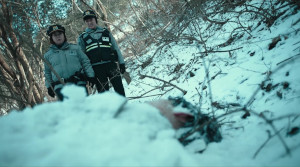
As is typical for a thriller, the screenplay features numerous plot twists, yet it handles them more skillfully than usual. This is because the characters' inner lives are not neglected, allowing us to immediately empathize with their struggles. While the fact that all three women harbor deep-seated trauma might feel like a bit much, it ultimately serves to bind them together. Jung Ryeo-won ("Castaway on the Moon") plays an erratic, hysterical woman who appears both helpless and like a ticking time bomb. Jung displays a surprising aptitude for conveying subtle nuances, occasionally making the viewer wonder if a cool, calculating mind lies beneath Do-kyeong’s apparent madness, for in this mystery-thriller, anything seems possible. We are actually guided through the story by the police officer, though, played by Lee Jung-eun ("Parasite"); she grounds the narrative while still managing to reveal her own emotions and insecurities. She is a strong woman who had to work hard for everything she has achieved in life, yet she continues to grapple with her relationship with her father.
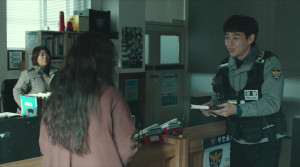
Despite a certain leisurely pace, the story moves briskly, precisely because new information keeps surfacing, forcing you to constantly piece the bigger picture back together. Since we are presented with various versions of events and occasionally alerted to inconsistencies, we soon stop taking things at face value, instead questioning every word and actively looking for contradictions. This is a huge part of the fun, even if you can’t expect to fit every single detail together perfectly. Just when you think you have a solid idea of what might have happened, the script throws another curveball. It goes so far that you might think the film is over, only to realize there is still a good half-hour left. For all the praise the script deserves, this is where a hint of disappointment creeps in; it seems the filmmakers didn't know when to stop, thereby unnecessarily jeopardizing the integrity of the plot and characters. Personally, it didn't bother me too much because the rest of the film won me over, but it is certainly the kind of thing that might make viewers roll their eyes at the story.
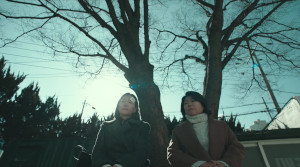
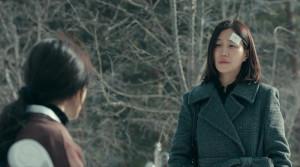
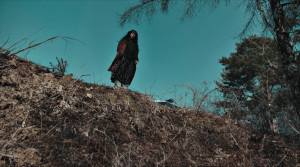
Another drawback towards the end is that director Christine Ko seems a bit too enamored with herself and her work, something evidenced by the drawn-out epilogue. Had she managed to smooth out these rough edges, "The Woman in the White Car" could have been a real gem; after all, the screenplay is fundamentally intelligent and suspenseful, and the characters are compelling in their own right. Despite these issues, however, the mystery-thriller earns a strong recommendation; for me personally, it is a little gem, simply because I hadn't expected to find such a high-quality thriller. I had never heard of the film before and only stumbled upon it by chance. Naturally, I have to wholeheartedly recommend it to all fans of the genre. Yes, it certainly draws some inspiration from films like "Fargo" — even if it lacks the humor — but the atmosphere is impressive, and I’ve already said enough about the beautifully written script. The logical conclusion: watch it.





Disclaimer
