


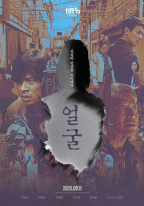
Eol-gul
South Korea 2025
Genre:
Thriller, Drama
Director:
Yeon Sang-ho
Cast:
Park Jeong-min
Shin Hyun-been
Han Ji-hyun
Kwon Hae-hyo
Im Sung-jae
Kim Jae-rok
Cha Mi-kyung
Joo Hae-eun

The Ugly
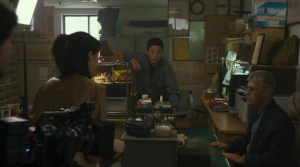
Story: Im Yeong-gyoo (Kwon Hae-hyo) is blind, but a living cultural treasure of Korea, as he can create beautiful name stamps. His son, Dong-hwan (Park Jeong-min), will one day take over his shop and handles the advertising. Currently, Yeong-gyoo is being interviewed by journalist Su-jin (Han Ji-hyun), who wants to weave a compelling documentary from his story and the hardships he has faced. But when Dong-hwan receives a call informing him that his mother's body has been found, the journalist senses a far more intriguing story. Dong-hwan never knew his mother, as she ran away from home shortly after his birth. It now turns out that she died 40 years ago. The journalist finds former colleagues of Yeong-hee (Shin Hyun-been), Dong-hwan's mother, who tell her that she had no enemies but was incredibly ugly. Eventually, one of the former colleagues lets slip that there was an incident involving the company's boss. However, they refuse to elaborate. Su-jin manages to find the address of another colleague who was involved in the affair at the time. This colleague reveals that she was raped by the boss and that Yeong-hee wanted to help her by confronting him. Could the boss have killed Yeong-hee?

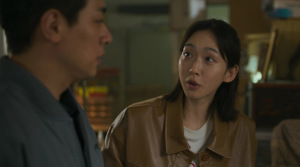
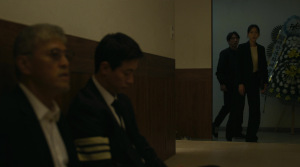
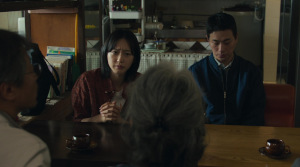
Review: "The Ugly" is one of those films that has its heart in the right place and genuinely wants to tell an interesting story. Unfortunately, in its execution, the film remains far too superficial. There are plenty of aspects that deserve further exploration. For example, the film's title, "The Ugly" (or "Face", as the original reads), suggests that it refers to the ugliness of our society, or perhaps the face we present in everyday life to appear respectable. Whether there is a different metaphorical meaning or not is answered much earlier than anticipated, but the director handles it as if he's merely hinting at it, promising a spectacular resolution at the end. Ultimately, the finale and the "resolution" don't have the expected impact on the viewer. On the other hand, the film's atmosphere, often reminiscent of a thriller, is quite successful. And so, we remain engaged as the film tries to uncover the exact circumstances surrounding the mother's death.
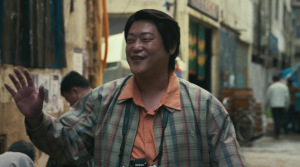
It's difficult to get a clear picture of the father's emotional state. This is perhaps understandable, given that his wife left him forty years ago, he had to raise his son alone, and his feelings for her can only be ambivalent. But when it becomes clear that she may not have run away at all, but was the victim of a murder, one expects a bit more of a reaction from him. The son, in turn, naturally has no emotional connection to his mother, but he takes care of the funeral arrangements and is then confronted with his mother's family, whom he is seeing for the first time in his life. Why have they suddenly come? To make sure that Dong-hwan doesn't want any of the money his grandmother left behind. Yes, a pretty clear picture is quickly established that the son has no real luck with his family. Even though he only lets us in on his inner turmoil very subtly, we can still feel a little sympathy for him, because there's also the journalist who wants to exploit the family drama that accidentally came to light during her interviews.
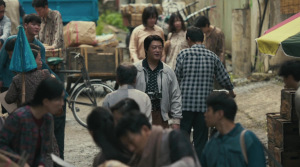
Very early on, Dong-hwan figures out why Su-jin is so eager to help him: she senses a great story that goes far beyond the father as a living cultural icon. Through the interviews, we naturally learn more about the mother and the life she led. The narrative style isn't particularly original, but the transitions between past and present are well-balanced, and the portrayal of working-class Korea in the 1980s is appealing. However, we never actually see the mother's face, as it's cleverly concealed by the camera or hidden by her hair. Ultimately, she's ashamed of her "monstrous" appearance. The viewer, though, has somewhat of a hard time believing she looks truly frightening. We occasionally catch glimpses of her lower face, or even the upper part, through her curtain of hair. Admittedly, only hinted at, but it doesn't exactly scream "monster". Is this an oversight on the part of the director, or perhaps a kind of foreshadowing? As mentioned before, what the director hopes to achieve with this approach doesn't quite work as intended.
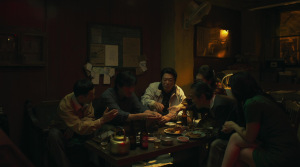
The journalist is quite unlikeable, as everything just seems to be a game to her. She also uses her charm in a very transparent way to elicit a few more answers from her interviewees. Somehow she comes across as artificial, and we never learn what she's really like. It's even more jarring, then, that she's portrayed at the end as one of the few characters with decency and a good heart. In one of the main roles, we see Park Jeong-min ("One Win"), who plays the son somewhat passively. We're not quite sure how to feel about him, but that's not as important as one might think, since the film also spends a lot of time in the past, where Shin Hyun-been ("The Closet") does most of the work as the mother. I'd like to say that she plays an outstanding role, but that's simply not the case. The drawn-out words coming from her mouth sometimes sound as if she has a disability, but this is probably just meant to convey her insecurity. Then again, she doesn't quit and even fights for another woman's rights. It doesn't quite add up.
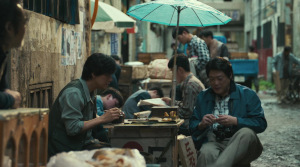
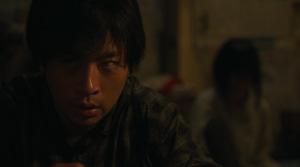
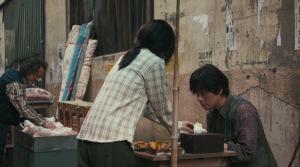
On closer inspection, the story proves to be not as clever as initially suspected. The metaphor behind the "ugliness" is very obvious, the characters themselves deserved more depth to carry the story, and the ending doesn't resonate as deeply as the director intended. However, the fact that the events can still move the viewer is due to Yeon Sang-ho's sure-handed direction. The atmosphere he creates with his visuals saves most of his works from mediocrity. He has already demonstrated this in films like "Revelations" and series like "Hellbound". The dark, thriller-like atmosphere, intensified by the journalist's investigations and the characters, all of whom seem to be hiding something, is a definite strength of "The Ugly". This isn't enough for a clear recommendation, but fans of the genre will certainly get their money's worth.





Disclaimer
