



Nom-beo-won
South Korea 2025
Genre:
Drama, Comedy
Director:
Kim Tae-yong
Cast:
Choi Wooshik
Jang Hye-jin
Gong Seung-yeon
Kwon Da-ham
Ahn Dong-goo
Yang Kyung-won

Number One
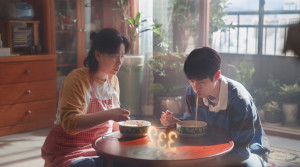
Story: Eun-sil (Jang Hye-jin) is a single mother who loses one of her two sons one day. Her other son, Ha-min (Choi Wooshik), blames her; he believes that had she not pressured his brother to eat one last bite, he wouldn't have had to rush to his exam and consequently wouldn't have been struck by a car. Soon after, Ha-min begins seeing a number that decreases by one whenever he eats something. It takes him a while to realize that the number only drops when he consumes a meal his mother has cooked. He concludes that his mother will die if the number reaches zero. Thus, he comes up with various excuses to avoid eating her cooking and decides to attend university in Seoul rather than in Busan, where his mother lives. Years later, he has a girlfriend and a job in the marketing department of an alcohol company. His girlfriend, Ryeo-eun (Gong Seung-yeon) — who grew up as an orphan — happens to be at Ha-min’s apartment when his mother pays a surprise visit. The two women get along famously, yet Ha-min refuses to agree when Ryeo-eun suggests that the couple move in with Eun-sil. To do so would be, in his mind, to indirectly sign his mother's death warrant.

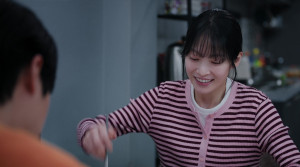
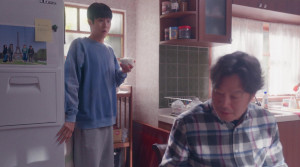
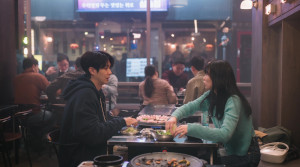
Review: Once again, we have a drama that adopts a supernatural premise, attempting to add a little extra flavor to the mix by experimenting with a few new spices. A recent South Korean example of this is "Pretty Crazy". "Number One" strives to strike a more even balance between drama and comedy, though whether it truly succeeds is open to question. The drama often takes center stage, clearly intended to be the story's core, yet even during pivotal moments, the tragic elements are lightened by humor. The blend doesn't always work, as it is sometimes unclear exactly which emotions the filmmakers want to evoke in the audience; personally, however, I appreciated getting a few warmer moments of hope rather than just another tear-soaked flick. Naturally, this also depends on how the tragedy is handled, and in this regard, the characters prove to be a real strength.

Interestingly, Choi Woo-shik and Jang Hye-jin have played mother and son before, in none other than the Oscar-winning film "Parasite". This time, their relationship is quite different, though. While the son certainly misses his mother, he wants to protect her, as all signs point to her dying if he continues to eat her home-cooked meals. For her part, the mother has to come to terms with living all alone, having seen her son move away first for his studies and then for work, only to find that he doesn't like her cooking. Various flashbacks scattered throughout the film give us insight into their dynamic, as they have had little to no contact in the present day. That changes only when Ha-min’s girlfriend strikes up a friendship with his mother. She tries to learn a few recipes from her, but nothing can quite compare to "Mom's cooking". Eventually, Ryeo-eun compels her boyfriend to reconnect with his mother, unaware that she is reopening old wounds in the process. After all, there is nothing he would love more than to enjoy his mother's cooking, yet it is precisely for that reason that he must stay away from her.

Naturally, this leads to tension. Ryeo-eun even issues an ultimatum to her boyfriend, and their relationship is defined by a constant cycle of drawing closer and drifting apart. She is also gripped by deep-seated insecurity stemming from the fact that she never had parents; consequently, she naturally hopes to marry into Ha-min’s family, even though that family now consists solely of his mother. While the flashbacks focus primarily on mother and son — touching, not least, on the accusation that the brother might still be alive had his mother not been so obsessed with food — the present-day narrative is defined by the ups and downs of the romantic relationship. In the final third, these two strands converge, though not without introducing a new tragic twist. Yes, "Number One" delivers the kind of drama one might be thoroughly sick of by now; yet, just as one cannot seriously call a well-cooked meal "bad" simply because it is being served for the umpteenth time, there are distinctive touches here that make the whole experience feel somewhat fresher.
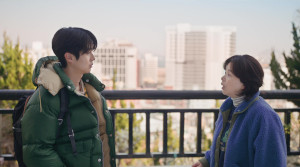
The truly fascinating aspect of the drama is the number Ha-min sees counting down with every dish his mother prepares, a number whose mysterious origin, as one might expect, is never fully explained. While the film is based on a Japanese novella by Sora Uwano, the material is perfectly suited for a Korean adaptation. Food and the figure of the mother, wholly dedicated to raising her children, remain deeply rooted in Korean culture, even though Ha-min’s mother already belongs to a generation that could easily have pursued a career as a lawyer or politician. Instead, Eun-sil lives in Busan as a single mother; having never received formal vocational training, she has devoted herself entirely to her children. This kind of self-sacrifice can evoke both gratitude and pity, emotions that are both explored in the story. Naturally, gratitude takes center stage, as underscored by the closing credits, which feature various real-life mothers eating. After watching "Number One", one is left with the conviction that the mother holds a far greater emotional significance in Korea than in the West. In a moment of self-reflection, Ha-min even wonders why Koreans are prone to calling out for their "Mom" first whenever they feel lost.
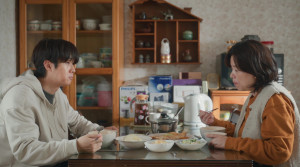

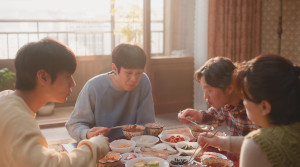
The city of Busan plays a significant role in the drama, as does, unsurprisingly, the food. However, the focus isn't on the sea or seafood; furthermore, despite their distinct dialects, the city's residents are by no means as rough as they are often portrayed in other films, but rather warm-hearted. This warmth is evident in all the characters, alongside a certain sense of humor or a chosen lightness in how they handle life's hurdles. The editing and color palette create a brisk, cheerful aesthetic, ensuring the drama doesn't feel overly manipulative when it inevitably turns to themes like illness. Even though the film hits us over the head with its message a bit too forcefully toward the end and during the closing credits, I particularly appreciated that "Number One" isn't your typical tearjerker. Instead, it aims to evoke a warm sense of longing and nostalgia — and in that regard it succeeds.





Disclaimer
