



Bo-seu
South Korea 2025
Genre:
Comedy, Action
Director:
Ra Hee-chan
Cast:
Jo Woo-jin
Jung Kyung-ho
Park Ji-hwan
Lee Kyu-hyung
Oh Dal-soo
Hwang Woo-seul-hye
Jung Eugene
Ko Chang-seok
Lee Sung-min

Boss
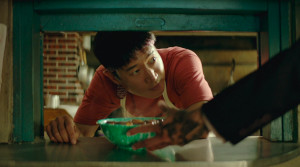
Story: In the 1990s, Im Dae-soo (Lee Sung-min) rises to become the boss of a gangster organization, aided by his subordinates Soon-tae (Jo Woo-jin) — who also fuels the crew with the meals he cooks —, Kang-pyo (Jung Kyung-ho) and Pan-ho (Park Ji-hwan). More than a decade later, Kang-pyo is in prison, and Soon-tae, facing pressure from his wife (Hwang Woo-seul-hye), wants to run his restaurant full-time and leave the gangster life behind. This comes at a terrible time for Dae-soo, as the organization is struggling and no bank is willing to lend him money. Nevertheless, he accepts Soon-tae’s resignation. The very next day, however, the boss is found hanged. Given the circumstances, it appears to be a suicide, and the gang is now desperately searching for a successor. Kim In-sool (Oh Dal-soo), who has previously handled the gangs administrative jobs, convenes a board meeting to select the new leader. That leaves only Soon-tae, who immediately refuses, having already left that life behind, and Pan-ho, who wants the role more than anything but is viewed by everyone else as incompetent and too hot-headed. To ensure fairness, the board decides to hold a vote. Soon-tae does his utmost to get votes for his "rival", but the latter manages to lose quite a few votes due to his own behavior. Just as Soon-tae is about to win the election, Kang-pyo is released from prison and enters the race as another candidate. Yet, having discovered a passion for dancing while incarcerated, he gratefully declines the position. The task of leading the gang falls to Soon-tae after all — and at the very moment the triads, to whom the group owes money, show up...

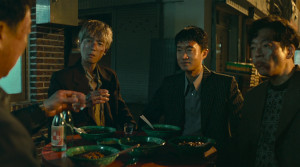
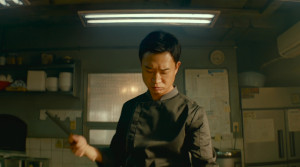
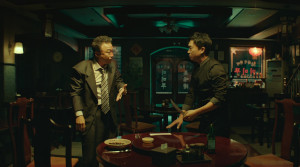
Review: Given the sheer number of Korean gangster dramas, most viewers have likely reached a point of saturation. By now, most aspects and themes of these films have arguably devolved into clichés that fail to generate any real excitement. Director Ra Hee-chan, who previously delivered an outstanding comedy with "Going by the Book", seems to have recognized this. Unfortunately, his latest film suffers from lacking a well-crafted script. Yet, the premise is fascinating and immediately draws the viewer in. What if a power struggle within a criminal organization revolved around the fact that no one wants to become the next boss? As expected, this concept works quite well, and the slapstick elements are kept in check. The humorous moments arise naturally from the absurd situations created by the premise, sparing the audience from over-the-top acting or cringeworthy scenes. It all shows great promise; sadly, though, "Boss" fails to fully capitalize on its characters in the way needed to keep the film engaging right to the end.
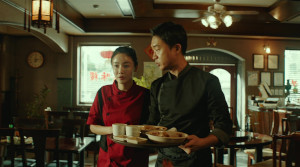
Given the rather lengthy setup, it is ultimately surprising that the film itself turns out to be quite short, clocking in at around 97 minutes. The gangster narrative follows familiar genre conventions, taking on almost epic proportions in the process; however, this is undermined by a certain haste in character development and the delayed introduction of the actual antagonist. Kang-pyo serves as an example of these character-related shortcomings. Jung Kyung-ho ("Manhole") repeatedly steals the show with his performance, yet he is released from prison quite late and deserved a few more scenes. Jo Woo-jin ("Mantis") also comes across as a bit too reserved in his role at times. He is meant to provide the deadpan humor, but scenes featuring the cook and his wife reveal that more could have been achieved, as a lovely chemistry develops between the couple. In contrast, Park Ji-hwan ("Handsome Guys") delivers a somewhat cartoonish portrayal of a would-be gangster boss who vastly overestimates himself - yet it fits the film perfectly.
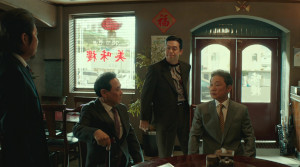
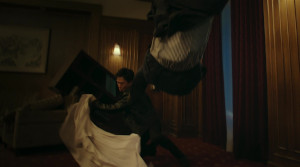
Naturally, no gangster drama of this kind would be complete without action. This is precisely where I would have liked to see a bit more. For the most part, the gangsters simply charge at one another in classic genre fashion and trade blows using all manner of weapons. The potential for something more is demonstrated by Kang-pyo, who incorporates his love of dance into his fighting style, turning his opponents into unwilling dance partners. The choreography here reveals a touch of innovation that is otherwise lacking. As for the action, the finale is saved from being entirely uninteresting by a delightful chaos that injects a certain dynamism into the proceedings. In the end, though, a comedy aiming to spoof the genre shouldn't miss so many opportunities to inject humor into the physical confrontations. There are occasional ideas that head in the right direction — such as bags of pig's blood worn under clothing — but, all in all, the fight scenes really needed better choreography to truly appeal to the target audience: people who are normally fans of the genre but can also laugh at it.
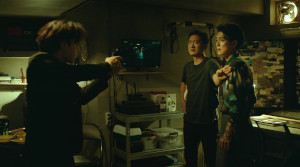
Naturally, "Boss" lacks the gritty reality of everyday gangster life, and it never gets truly violent, either. While a grittier approach might not have worked in a comedy, the lack of it means the action also misses out on any real edge. Kang-pyo’s dance-like skirmishes with his opponents hint at how convincing the action could have been had it followed in Jackie Chan’s footsteps; however, avoiding mere slapstick requires genuine martial arts proficiency. As it stands, the action-comedy remains rather unspectacular, a fact that becomes particularly apparent toward the end. With countless factions involved, including the obligatory, predictable betrayal, they all collide during the showdown, creating the impression that something epic is about to unfold. Yet the screenplay fails to capitalize on good ideas, and ultimately, the whole thing fizzles out. Sure, the film reaches a satisfying conclusion, allowing the viewer to sit back with a smile, but is that really enough? Especially when considering the story's potential to deconstruct and subvert the gangster genre, one cannot help but feel a sense of disappointment.
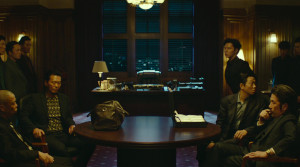
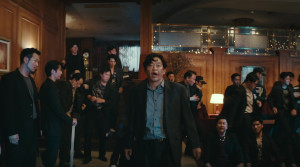
The characters are another disappointment. There are simply too many of them to allow enough room to give each one the time they deserve. For instance, an undercover agent — arguably the worst of his kind — steps into the spotlight relatively late in the game; while he does provide some genuinely funny moments, we know as little about him as we do about the story's protagonist. One would have expected the latter, at least, to have a bit more depth and some color. At the very least, "Boss" scores some points with its humor. While there are no laugh-out-loud moments, the viewer is spared any cringeworthy slapstick. All of this sounds rather mediocre, and it is, though glimpses of what this gangster comedy could have been shine through from time to time. Perhaps it wouldn't have taken much to get to the next level. A little fine-tuning of the script - specifically regarding the characters, ensuring the same intense chemistry between the other figures as exists between our hero and his wife — would have made the audience feel more invested. It is odd, then, that more time wasn't simply taken to achieve this; "Boss" actually feels too short for the story it aims to tell.





Disclaimer
